Effects of seismic survey to marine life: fish, invertebrates, marine turtles, marine mammals - whales, whale sharks, coral reefs , and others.
A seismic survey is conducted in a particular area to quantify the amount of deposited natural gases and minerals, like oil or petroleum.
1. Seismic blasting can damage the hearing structures, (McCauley et al. 2003)
2. Cause body tissues to hemorrhage (hastings, 1995)
3. And damage reproductive organs in marine organisms (Jensen and Alberdice, 1989)
4. Seismic blasting can cause behavioral modifications and reduce or eliminate available habitat for breeding / spawning, foraging and migration (Richardson et al. 1986; Harris et al. 2001; McCauley et al. 2000; McCauley et al. 1998)
5. Seismic noises can alter fish distribution by tens of kilometers (Slotte et al. 2004; Engas et al. 1996)
6. Seismic blasting can elicit physiological stress and neural-immune responses in Marine organisms (Santulli et al. 1998; Romano et al. 2004)
7. Seismic blasting damages planktonic eggs and larvae found in the immediate vicinity of airguns (Dalen and Knutsen, 1985)
8. Seismic blasting can reduce catches in commercial fisheries (Slotte et al. 2004; Soldal and Loekkeborg, 1993; Engas et al. 1996; Skalski et al. 1992
9. The impact of the sound underwater tends to bursts air bladders (i.e. swim bladders for fish, lungs for marine mammals and the animals may have well sunk to the ocean floor from ruptured lungs. Andrea Leonor Bautista,manager, Cetacean Research and Conservation Project - WWF. (inq7.net. Thu, Sep 08, 2005)
Air pollution: Offshore natural gas drilling causes a significant amount of air pollution. Each offshore oil platform generates approximately 214,000 pounds of air pollutants each year (National Oceanographic & Atmospheric Administration).
An average exploration well for oil or natural gasgenerates some 50 tons of nitrogen oxides (NOx), 13 tons of carbon monoxide, 6 tons of sulfurdioxide, and 5 tons of volatile organic hydrocarbons7. These pollutants are the precursors to smog, acid
rain and contribute to global warming.
Water pollution: Oil and Gas drilling operations generate huge amounts of waste that is discarded intowater. According to the National Academy of Sciences, a single well produces between 1500 and 2000 TONS of waste material.
Debris includes drill cuttings, which is rock ground into pieces by the bit;and drilling mud brought up during the drilling process. This mud contains toxic metals such as lead, cadmium and mercury. Other pollutants, such as benzene, arsenic, zinc and other known carcinogens and radioactive materials are routinely released in “produced water,” which emerges when water is brought up from a well along with the oil or gas.
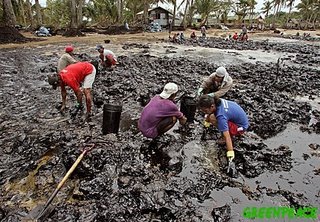
Oil Spills: Oil is extremely toxic to a wide variety of marine species, and current cleanup methods are incapable of removing more then a small fraction of the oil spilled in marine waters. Offshore drilling platforms and pipelines spilled 1.8 million gallons of oil in U.S. waters from 1990-1999 in 224 reported accidents – that’s an average of almost 500 gallons a day.

FIDEC Executive Director Vince Cinches in dialogue with local fisherfolk leaders in Tajao, Piamungajan, one of the affected areas along Tañon Strait. Photo by Yowee Gonzales
Unpaid gango and payao (fish pens) during the Japan Petroleum Exploration Co. Ltd. (Japex) oil exploration: